
GREG GOODE BIO
Greg Goode has experience in academia and the U.S. Army, and most recently, he is enjoying retirement after almost 30 years in the corporate world. He earned an M.A. and Ph.D. from the University of Rochester and did graduate study at the Universität zu Köln in Germany. He began studying idealist philosophy in the late 1970s and continued through contemplative inquiry and academic study. He has also studied Advaita Vedanta, Pure Land Buddhism, Madhyamika Buddhism, and the Direct Path. He is the author of Standing as Awareness, The Direct Path, Emptiness and Joyful Freedom, After Awareness, Real-World Nonduality, and Enlightening the Physical World. He lives in New York City with his wife and son.
BOOK DESCRIPTIONS
STANDING AS AWARENESS: THE DIRECT PATH
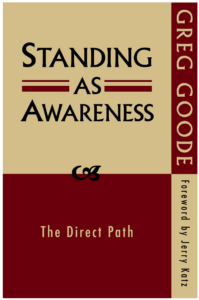
Inspired by Sri Atmananda (Krishna Menon), the Direct Path is a “pathless path.” It simply articulates the being of you and the world as loving, open, clear awareness. If this truth is realized as your experience, then nothing need be done. The path disappears, and life is lived in sweetness and celebration! But if there are still questions or doubts, the Direct Path contains unique and powerful resources that stabilize this truth as your everyday reality.
This is a revised edition of the book, expanded to add chapters on the Direct Path in addition to its selection of dialogs from a decade of “Nondual Dinner” gatherings. The first three chapters unfold the basics of the Direct Path, such as standing as awareness, being in love with awareness, and exploring awareness. Included are several experiments that help establish your everyday experience as awareness, always and already. The dialogs cover questions such as the desire for enlightenment experiences, the relationship between the brain and awareness, the question of “nondually correct” language, the belief in physical and mental objects, the idea of having a sage’s experience, and more.
THE DIRECT PATH: A USER GUIDE
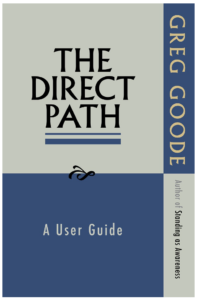
Have you ever done nondual inquiry and said to yourself, “I understand it intellectually, but I don’t feel it. It’s not my experience!” If so, the Direct Path, inspired by Sri Atmananda Krishna Menon, could be for you.
This book is the “missing manual” to the Direct Path. It presents self-inquiry from beginning to end and beyond in a user-friendly way. The core of the book is a set of 40 experiments designed to help dissolve the most common nondual sticking points, from simple to subtle. The experiments cover the world, the body, the mind, abstract objects, and witnessing awareness. You are taken step by step from the simple perception of a physical object all the way to the collapse of the witness into pure consciousness. Your takeaway is an intuitive, living certainty that you and all things are awareness, openness, and love. Also included is a section on teaching and the notion of a “post-nondual realization”.
This book can be utilized on its own or as a companion to the author’s Standing as Awareness.
An Expanded Second Edition is coming! The new edition will be expanded to include new topics, such as the importance of preparatory activities that supercharge your nondual inquiry, and the value of modalities that are not in the Direct Path’s own pedagogical wheelhouse, such as mental-health and trauma-informed therapies, ethics, and the balance of body, head, heart, and maturity. There will be new topics of investigation, such as the intersubjective agreement and observation of objects, the status of other minds and persons, and the dualistic, misguided goal of becoming “an enlightened being.”
AFTER AWARENESS: THE END OF THE PATH
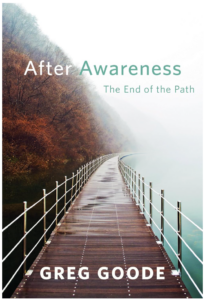
This book offers an insider’s look at the Direct Path – a set of liberating spiritual teachings inspired by Shri Atmananda Krishna Menon. The chapters herein share secrets of the Direct Path that are rarely revealed, and topics hardly ever mentioned in nonduality discussions, such as the importance of ethics, the language of nonduality, the role of the guru, and the provisional nature of the Direct Path itself.
Our modern world is one of myriad beliefs and traditions. Most seekers explore a variety of ideas and spiritual paths before finding something that feels right: Eastern and Western philosophies, orthodox practices and mystical experiences, independent studies, or devotion to a teacher. This book takes the wide variety of backgrounds into account, treating the Direct Path as one approach among many, rather than an objectively true description of reality. It explores the Direct Path without presuming belief in the path’s concepts.
AFTER AWARENESS is not a prescriptive, step-by-step “how-to” book. Instead, it exposes core principles in nonduality, along with examples and critiques of these ideas. You’ll be able to discover how the central elements of the Direct Path – such as direct experience, awareness, and the witness – are offered as tools of self-inquiry, not eternal truths.
EMPTINESS AND JOYFUL FREEDOM

The pinnacle of Buddhism’s understanding of reality is the emptiness of all things. Meditating on emptiness uncovers an exhilarating freedom with nowhere to stand, while engendering a loving joy that engages the world. This path-breaking book presents the emptiness teachings in a fresh, innovative way, by covering Buddhist as well as analogous Western approaches. Goode and Sander don’t rely solely on historical models and meditations. Instead, they have created over eighty original meditations on the emptiness of the self, issues in everyday life, and spiritual paths. These meditations are guided both by Buddhist insights and cutting-edge Western tools of inquiry, such as positive psychology, neuroscience, linguistic philosophy, deconstruction, and Pyrrhonian skepticism. The result is a set of liberating and usable tools for Buddhists and non-Buddhists alike.
REAL-WORLD NONDUALITY: REPORTS FROM THE FIELD
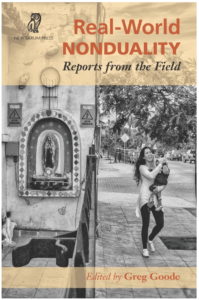
This book is an anthology in which eleven people recount their experiences with the Direct Path. How well did it become woven into their daily lives? The writers are not claiming enlightenment or liberation. For this very reason, we can each find something in their essays to learn from. The writers explain in engaging detail how this approach enriched, refreshed, and sometimes frustrated their self-inquiry and established practice, whether Sufism, Buddhism, Christianity, Western philosophy, Advaita Vedanta, or “New Age” spirituality. As Greg Goode writes in the introduction, “Readers may find it a useful springboard to look at nonduality from different angles or learn that someone else is experiencing the same issues they are going through.”
ENLIGHTENING THE PHYSICAL WORLD: INVESTIGATING MATTER WITH BERKELEY AND THE DIRECT PATH
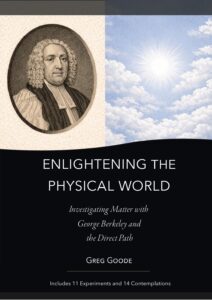
This book is an educational guide to the insight that the so-called “physical world” is not physical. This insight is a little-known area of agreement between the Western philosopher George Berkeley (1686-1753) and the Direct Path, inspired by Sri Atmananda Krishna Menon (1883-1959).
For modern students of the Direct Path and nonduality in general, the materialist mindset can be a stumbling block. Materialism is a view that includes the claims that reality is physical, that physical matter exists objectively, and that matter is already present and causes our perceptions of it. These claims are baked into the fabric of our modern education. For modern Direct-Path students, if this materialist view is not investigated, they may be left with a number of dualistic assumptions about the world and the self, such as “What exists is not always perceived,” “What is in my consciousness may not be in your consciousness,” or “When the body passes away, so do I.” These assumptions are common, and if they are not investigated, they form roadblocks to self-inquiry. How can they be deconstructed?
George Berkeley’s insights and critiques of physical matter can be of great help. Berkeley’s relentless questioning adds to the Direct Path’s collection of clear, intuitive, experiential tools that modern inquirers can use to investigate and deconstruct the claims of materialism. The takeaway for readers is that the notion of physical matter as understood by its own proponents simply makes no sense. For Direct-Path students who realize this, the rest of their path towards self-knowledge is smooth sailing. They are no longer inconvenienced by thinking that awareness is bound by physical or spatial qualities.
The book includes 11 Experiments and 14 Contemplations.
Greg’s Foreword to: HERE NOW ONE: A PRACTICAL GUIDE TO THE SPIRITUAL LIFE by Terry Moore.
HERE NOW ONE is taken from the spiritual guidance Terry has offered over the years. Although these topics originally arose in a Sufi context, Terry’s advice is universal, inclusive, and, above all, practical enough to be suitable for any spiritual traveler. He offers guidance on topics such as finding the meaning of existence, understanding God as our guide, traveling the spiritual path, fruitful approaches to prayer, and how to read sacred texts—all in the service of self-transformation. The unifying theme that emerges from all his counsel is that the world is the perfect classroom for self-knowledge, which leads to knowledge of the Real.
Greg’s Foreword to: SHAKTI RISING: EMBRACING SHADOW AND LIGHT ON THE GODDESS PATH TO WHOLENESS
by Kavitha M. Chinnaiyan, M.D.
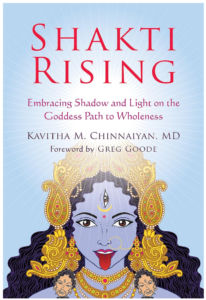
The wisdom of the Mahavidyas, the ten wisdom goddesses who represent the interconnected darkness and light within all of us, has been steeped in esoteric and mystical descriptions that made them seem irrelevant to ordinary life. But with this book, written by a respected cardiologist who found herself on a spiritual search for the highest truth, you’re invited to explore this ancient knowledge and learn how it can be applied to daily struggles and triumphs—and how it can help you find unreserved self-love and acceptance.
The pursuit of contentment is an innate part of the human experience, arising from a fundamental sense of lack or inadequacy—all the things we believe to be wrong with us when we compare or judge ourselves. In our search for peace and happiness, we may find ourselves fighting the shadows within us, trying to repress or disown certain qualities, especially our anger, violence, discomfort, craving, and disappointment. But in order to stop this fight, we must expand our understanding beyond the dualities of good versus bad, right versus wrong, and beautiful versus ugly, and accept the parts of ourselves we’ve tried to deny.
Pulling from Eastern traditions including tantra and yoga, and focusing on the feminine principle of divine energy also known as Shakti, this book bridges the divide between dualistic concepts and non-dual philosophy. By exploring the symbolism of the Mahavidyas (Kali, Tara, Tripurasundari, Bhuvaneshwari, Tripura Bhairavi, Chinnamasta, Dhumavati, Baglamukhi, Matangi, and Kamalatmika)—each with a veiled face representing a destructive quality that perpetuates ignorance and suffering, and a true face representing the wisdom that stimulates profound transformation and liberation—you’ll learn to embrace and incorporate every aspect of who you are.
With practices, self-inquiry prompts, and stories from the author’s own spiritual seeking, this exploration of the divine feminine will gently reveal the source of your fear, pain, and suffering, showing you that when you allow those parts of yourself to arise and simply be, you can finally begin to heal, overcome your limitations, and open to the light and beauty of your true nature.